
Catch Me Outside, How About Dat (Yes, For Therapy)
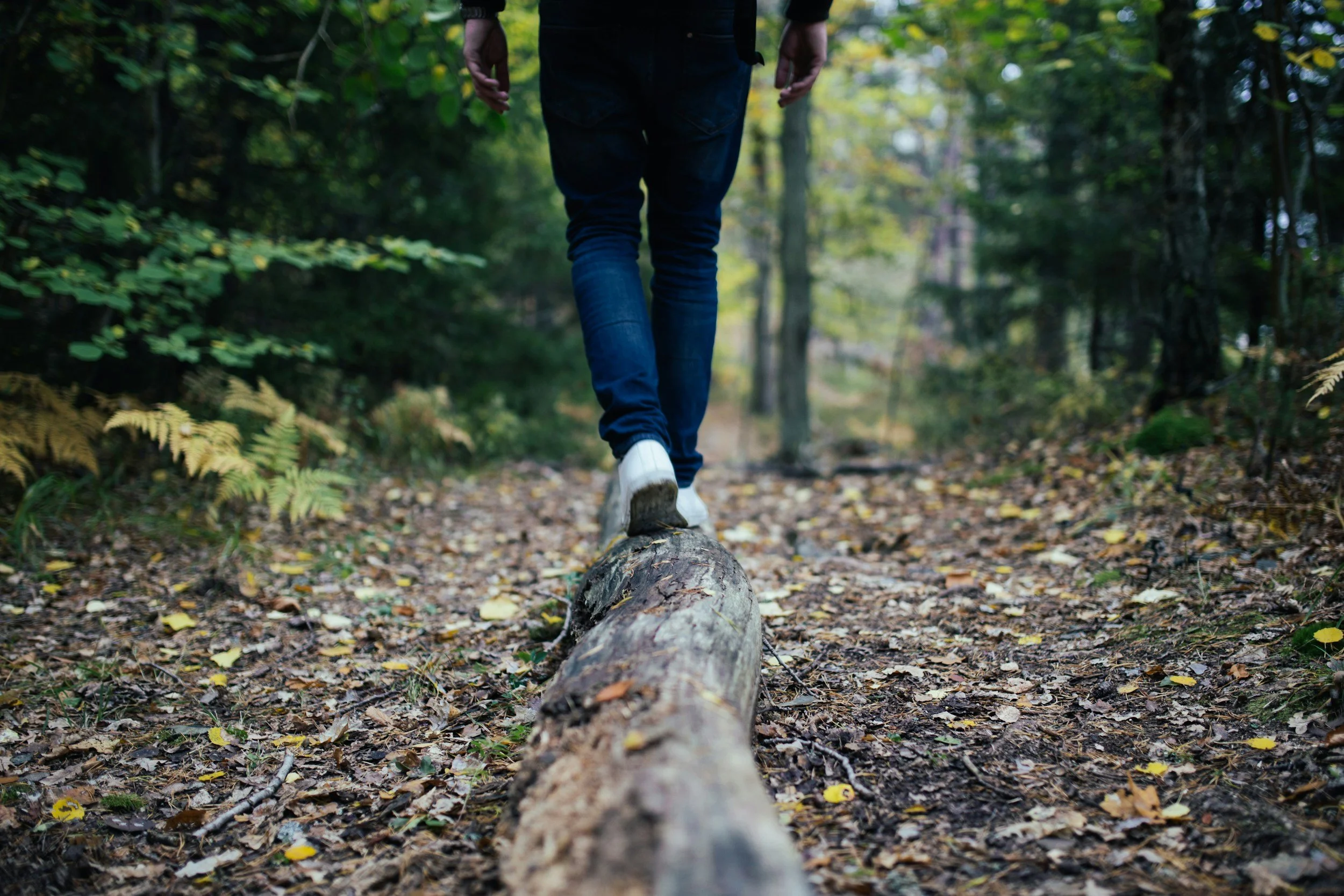
So… We’re Just Walking Around…Or?
If your therapist has ever suggested going for a walk during a session, you might have thought, wait… is this therapy, or are we training for a 5K? Totally fair.
Don’t worry. I promise you will not need hiking boots or an Apple Watch to track your steps. Walk and talk therapy is not about distance or pace. It is about giving your nervous system a bit more room to breathe. It is still therapy, just with a nicer view, fewer throw pillows, and less of that intense eye contact that makes you wonder if you are blinking enough.
For a lot of people, sitting face to face in a small room and talking about vulnerable stuff feels like a lot. You are being asked to open up emotionally while also trying to figure out what to do with your hands. Walking helps take some of that pressure off. Moving side by side feels less exposed. There is no spotlight. Just fresh air, a steady rhythm, and space to talk, or not.
And this is not just a vibe thing. There is actual research behind it.
Spending time in nature while walking has been shown to reduce anxiety and depression, support emotional regulation, and improve overall well-being (Bratman et al., 2024; Olafsdottir et al., 2020). It is not magic, but the combination of movement and environment seems to help the brain and body settle enough to feel a little more open and a little less guarded.
Kaplan (1993) talks about something called soft fascination. Basically, nature holds our attention in a gentle way. Watching water move, leaves rustle, or a bird hop along the path. It is engaging without being overwhelming. For many people, that helps the nervous system shift out of survival mode and into something closer to, okay, maybe I can talk about this.
You would not be alone if this feels easier. Walk and talk therapy has been especially helpful for clients who feel stuck, who struggle with eye contact, or who just need a different way to show up. Some neurodivergent clients find the outdoor sensory environment more manageable than the quiet stillness of a therapy office (Trevisan et al., 2017; Liu et al., 2024). Youth often find walking less intense than sitting across from someone and talking about feelings and hard stuff, shocking, I know. And some men report that walk and talk therapy makes it easier to open up without feeling quite so exposed (Doucette, 2004; Dickmeyer et al., 2025). Talking about your feelings while looking at trees instead of directly into someone’s soul is, in my opinion, a solid upgrade.
For some clients, nature-based therapy is not just helpful, it is meaningful. Many Indigenous and land-connected folks already understand healing as something that happens in relationship with land, body, and spirit (Field, 2022; Greer & Lemacks, 2024). For these clients, therapy on the land can feel more aligned with their values and ways of knowing.
And of course, this is not the right fit for everyone. Sometimes we stay indoors. Sometimes the weather has other plans. And sometimes you really just want to sit on a couch, hold a mug, and not worry about the emotional or the triggering sound of mosquitoes. All of that is okay.
For those who are curious, walk and talk therapy offers something simple and real. It is not a replacement for deep therapeutic work. It is just a different way in. A slower pace. A chance to feel your feet on the ground while you sort through whatever is sitting on your heart.
And no, you do not have to talk the whole time. Sometimes the quiet moments are where the real work happens. And if Parker, my therapy dog, is with us, even better. He may make us laugh by chewing a stick or eating grass like the half mountain goat he is very convinced he is.
Curious to Learn More?
If this approach sounds like something you’d like to explore, I offer a free 20-minute consultation so we can connect and see if it feels like the right fit.
Sources
Bratman, G. N., Anderson, C. B., Berman, M. G., Cochran, B., de Vries, S., Flanders, J., ... & Daily, G. C. (2024). Nature and mental health: An ecosystem service perspective. Science Advances, 10(1), eadh7618. https://doi.org/10.1126/sciadv.adh7618
Dickmeyer, C. A., Avery, M. R., Mahoney, R. S., Klenk, M. M., & Liddell, J. (2025). Walk-and-talk therapy for men experiencing low mood: A randomized pilot study. Journal of Contemporary Psychotherapy. Advance online publication.
Doucette, P. A. (2004). Walk and talk: An innovative approach to therapy. Perspectives in Psychiatric Care, 40(1), 23–24. https://doi.org/10.1111/j.1744-6163.2004.tb00003.x
Field, J. (2022). Walking as healing: Culturally grounded therapy on the land. Canadian Journal of Counselling and Psychotherapy, 56(2), 127–143.
Greer, A., & Lemacks, E. (2024). Reclaiming land and balance: Indigenous wellness in therapeutic practice. Journal of Indigenous Social Work, 9(1), 45–61.
Kaplan, R. (1993). The role of nature in the context of the workplace. Landscape and Urban Planning, 26(1–4), 193–201.
Liu, M., Li, L., Pan, Z., Liu, D., Tang, S., & Hu, Y. (2024). Effects of animal-assisted therapy on social interaction and regulation in children with autism spectrum disorder: A systematic review and meta-analysis. Children and Youth Services Review, 156, 107303. https://doi.org/10.1016/j.childyouth.2024.107303
Olafsdottir, G., Cloke, P., & Vögele, C. (2020). Place, green exercise, and stress: An exploration of individual and contextual characteristics in a randomized trial. Health & Place, 61, 102237. https://doi.org/10.1016/j.healthplace.2019.102237
Trevisan, D. A., Roberts, N., Lin, C., & Birmingham, E. (2017). How do adults and teens with self-declared autism spectrum disorder experience eye contact? A qualitative analysis of first-hand accounts. PLOS ONE, 12(11), e0188446. https://doi.org/10.1371/journal.pone.0188446
